From Care to Climate: Building a Culture of Sustainability at Highfield Healthcare
In partnership with Fifty Shades Greener and KWETB
In healthcare, every decision matters. The care patients receive, the wellbeing of staff, and the environment in which healing takes place all shape outcomes. But increasingly, another factor is entering the conversation: sustainability.
At Highfield Healthcare in Dublin, sustainability is no longer a distant goal or policy document. It is becoming part of everyday practice, driven by staff, supported by leadership, and embedded into the organisation’s long-term vision. What started as a training initiative has evolved into a cultural shift.

40
Staff upskilled in Green Skills

97%
Of employees support sustainability
884t
CO₂ Baseline Calculated (2024)
A Healthcare Organisation Ready to Lead
Highfield Healthcare provides specialist mental health and elder care services across multiple locations in Dublin. Committed to delivering compassionate, evidence-based care that preserves dignity and improves quality of life, Highfield has grown steadily and with that growth came a clear-eyed recognition: sustainability needed to become part of the organisation’s future.
Healthcare facilities consume significant energy, produce waste, and operate around the clock. At the same time, they are places dedicated to healing people and improving lives. Healthcare organisations also face increasing pressure from regulators, patients, and partners to reduce environmental impacts, strengthen governance, and support staff wellbeing.
For Highfield, sustainability was not simply a compliance requirement, it was an opportunity to create a healthier organisation for patients, staff, and the wider community. With growing services and an expanding workforce, leadership asked a question that was simple but powerful
“How can we deliver outstanding care while also protecting the environment and supporting our people?”
The answer was: education & training.
Stephen Eustace, Chief Executive
“This is about future-proofing Highfield Healthcare while staying true to our core purpose of care. We’ve built real momentum by embedding ESG into our strategy, culture, and decision-making. The next phase is focused on delivery; improving how we manage our environmental impact, strengthening outcomes for our people and patients, and ensuring robust governance and transparency as we progress our ESG roadmap.”
The Challenge
Like many healthcare organisations, Highfield Healthcare operates in a complex and resource-intensive environment. Hospitals and care facilities must balance patient care, operational efficiency, regulatory requirements, and financial sustainability, all while managing the significant environmental footprint that comes with running round-the-clock care facilities.
Initial analysis identified several key challenges facing the organisation:
- High energy use driven by heating and electricity demands across multiple care sites
- Opportunities to improve waste segregation and resource management
- Growing expectations from regulators, patients, and partners around sustainability and ESG reporting
- A need to develop internal ESG knowledge and leadership capability at every level
- The importance of embedding sustainability into governance structures and daily decision-making
At the same time, when staff were consulted, the response was resoundingly positive. An organisation-wide survey revealed that 97% of employees said becoming more sustainable was a positive step for the organisation. The message was clear: people wanted change. They just needed a roadmap. The challenge was not motivation. It was creating the knowledge, structure, and strategy to turn ambition into action.
Listening to the People Who Matter
A key early step in the project involved asking employees, patients, and partners what sustainability meant to them. Through surveys and workshops, the project team conducted a double materiality assessment, analysing sustainability priorities from the perspective of employees, patients, suppliers, and regulators.
Their answers revealed something important:
- Staff wanted better waste systems and more opportunities to contribute to environmental initiatives
- Patients prioritised quality of care, staff wellbeing, and environmental responsibility
- Suppliers emphasised energy use, waste reduction, and ethical governance
This listening exercise was not just a box-ticking exercise. It shaped everything that followed. By anchoring the sustainability strategy in the genuine concerns and priorities of the people closest to the organisation, Highfield ensured that what was built would be meaningful, practical, and lasting.
The Journey: ESG by FSG
Through a collaboration with Fifty Shades Greener (FSG) and KWETB, Highfield Healthcare launched the ESG by FSG programme, a combined consultancy, training, and capacity-building initiative designed to embed sustainability within the organisation. The programme unfolded across three interconnected phases.
Phase 1: Building the Strategy
Working with Fifty Shades Greener, Highfield Healthcare developed its first comprehensive Environmental, Social and Governance (ESG) strategy. The insights gathered through the stakeholder engagement process informed the creation of a detailed sustainability roadmap, one grounded in the real priorities of the organisation and the people it serves.
The strategy sets an ambitious long-term environmental goal:
Achieving carbon-neutral core operations by 2030
The plan focuses on practical, measurable actions across the organisation, including:
- Reducing energy use and transitioning to renewable technologies such as solar PV and heat pumps
- Improving waste segregation and eliminating single-use materials
- Conserving water and natural resources
- Implementing sustainable procurement practices
- Strengthening governance, transparency, and sustainability reporting
- Supporting staff wellbeing and inclusion
To guide this work, the organisation calculated its first carbon baseline, identifying 884 tonnes of CO₂ emissions in 2024, with natural gas used for heating identified as the single largest contributor, accounting for 75% of operational emissions. This data now provides a clear and measurable starting point for the reductions that lie ahead.
Phase 2: Empowering Staff with Green Skills
Rather than limiting sustainability to facilities or management teams, the initiative focused on empowering staff across all departments. Through the Green Growth Academy of FSG, staff participated in sustainability training programmes designed to build practical ESG knowledge and leadership skills:
- ESG Leadership training for senior leaders
- QQI Level 5 Environmental Sustainability in the Workplace training
- Sustainability awareness sessions for employees across all departments
Nurses, administrators, managers, finance and operational teams all became part of the conversation. For many participants, it changed the way they viewed their workplace. Suddenly, small daily actions, from turning off unused equipment to improving recycling systems, became part of a much larger picture.
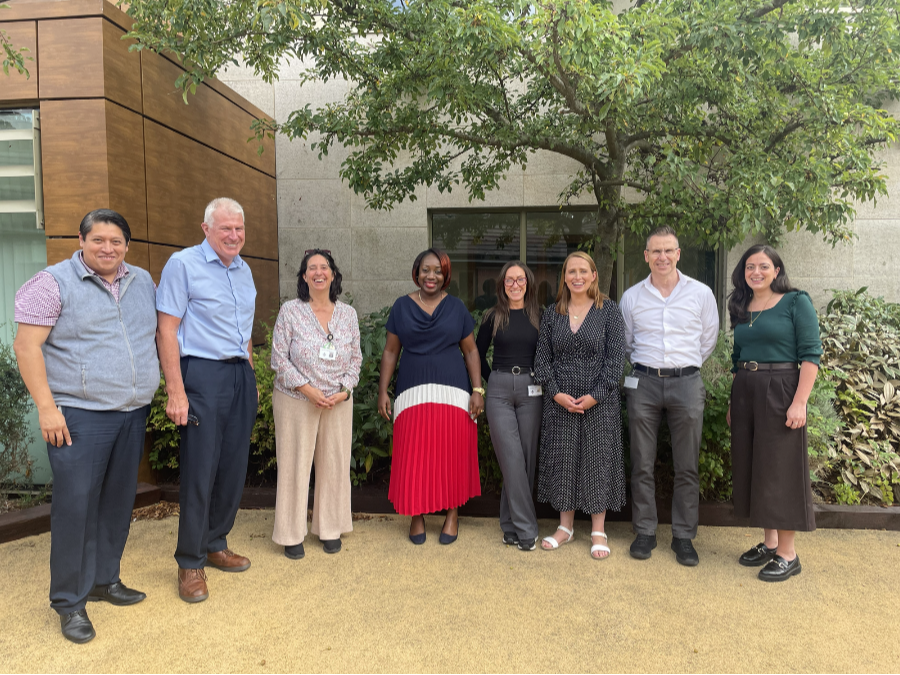
In total, 39 staff members were enrolled in green skills training, 27 completed a QQI Level 5 Sustainability qualification and 8 more completed an ESG Leadership programme certified by the UN Mandate University of PEACE in Costa Rica. empowering them to identify opportunities for environmental improvements within their own departments. Sustainability was no longer limited to leadership or facilities management. It became something every employee could contribute to.
Phase 3: Embedding Sustainability into Governance
Perhaps the most important structural outcome of the project is how sustainability is now shared across the organisation. Highfield has established a dedicated ESG leadership team that includes senior executives and department leaders. Together, they oversee sustainability initiatives, track progress, and integrate ESG considerations into organisational decision-making.
This team brings together representatives from:
- Executive leadership
- Finance
- Clinical operations
- Human resources
- Facilities and sustainability
Alongside this, a Green Team is being developed to help implement environmental initiatives at operational level. This approach ensures sustainability is not treated as a separate project. It becomes part of how the organisation operates every day. Embedding ESG into governance means sustainability is now considered in organisational decisions, risk management, and long-term planning.
Recognised for Leadership: Achieving The LeafMark™
A standout milestone in Highfield Healthcare’s sustainability journey is the achievement of Three Leaves in the LeafMark™ certification, the highest level of recognition within the framework created by Fifty Shades Greener.
What Is the LeafMark™?
The LeafMark™ is a three-tier certification that shows how deeply sustainability learning has been embedded across a workforce. It is deliberately different from traditional eco-labels and building audits. Rather than asking “Do you have the right technology?”, the LeafMark™ asks: “Do your people have the right skills?”
Because real change doesn’t happen because a logo is on a website. It happens because the people behind that logo understand what they are doing and why.

Why Three Leaves Matters for Highfield
Three Leaves is awarded to organisations that have demonstrated leadership in sustainability education across their workforce. To reach this level, an organisation must meet all the following criteria:
- At least 50% of staff completing Green Skills Level 1 (Sustainability Awareness)
- At least 2% of staff completing Green Skills Level 2 (practical sustainability skills for operations)
- At least one team member completing Green Skills Level 3 (advanced ESG and sustainability reporting expertise)
Highfield achieved all three levels through its partnership with FSG and KWETB, embedding sustainability knowledge from frontline staff right through to senior leadership. This bottom-up approach to upskilling is what makes the Three Leaf achievement particularly significant.
It is not a badge purchased or a form filled in. It is a verified reflection of the investment Highfield has made in its people and the genuine transformation that investment has produced.
At Three Leaves, sustainability isn’t a side project, it is part of your strategy, your culture, and your everyday decisions.
For patients, partners, regulators, and funders, the LeafMark™ provides visible, credible evidence that Highfield Healthcare’s sustainability programme is grounded in real learning, genuine commitment, and measurable progress.
Strengthening ESG Performance: Bronze Certification Achieved
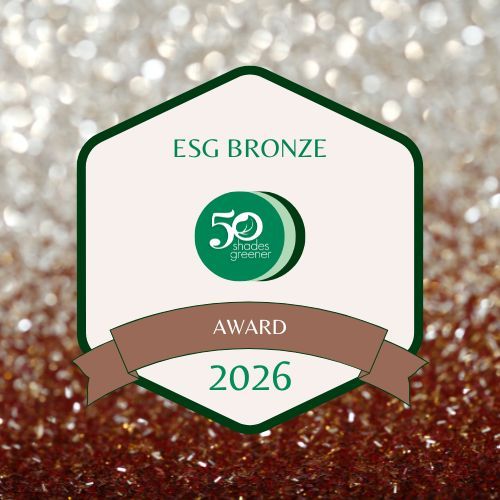
Alongside its progress in sustainability training and strategy, Highfield Healthcare has also been recognised through the ESG Business Certification, achieving Bronze level status.
This certification reflects measurable progress across all three pillars of ESG, with Highfield Healthcare meeting:
- 12 Environmental criteria
- 6 Social criteria
- 6 Governance criteria
(out of a total of 50 criteria)
Achieving Bronze represents an important milestone in Highfield’s journey, demonstrating that sustainability is not only being discussed and planned, but actively implemented across the organisation.
Rather than treating this as a final destination, Highfield Healthcare is using the certification as a benchmark for continued improvement. The organisation is already working towards achieving Gold level certification by 2027, further strengthening its environmental performance, social impact, and governance practices.
This progression reflects a broader mindset within Highfield Healthcare: sustainability is not a one-time achievement, but an ongoing process of learning, improving, and raising standards over time.
Eddie Nestor, Head of Facilities & Sustainability
“We’ve focused on building a solid foundation, upskilling our people, understanding our impact, and putting the right structures in place. Our partnerships with Fifty Shades Greener and Kildare Wicklow Education Training Board have been key in accelerating that progress. The Three LeafMark™ and Bronze certification reflect where we are; now the focus is on execution; improving how we use energy, water, and materials, strengthening staff wellbeing and engagement, and embedding clear governance, accountability, and transparency across the organisation.”
Small Changes, Big Impact
Across the organisation, new ideas are already beginning to take shape. Energy audits are planned to identify efficiency opportunities. Waste segregation systems are being reviewed and improved. Single-use materials are being reconsidered across departments.
Future initiatives include renewable energy installations, electric vehicles, and expanded sustainability reporting. But beyond the technical projects, the biggest change is cultural.
Sustainability is now part of everyday conversations among staff. From “why should we do this?” to “how do we do more of it?”
Environmental Transformation in Action
The strategy has already identified a clear set of priorities for reducing Highfield’s environmental footprint:
- Energy audits across all facilities to identify efficiency opportunities
- Transition to renewable energy technologies including solar PV and heat pumps
- Improved waste segregation systems across all sites
- Reduction of single-use plastics and disposable materials
- Implementation of water conservation measures
With natural gas for heating accounting for 75% of operational emissions, addressing energy use is the organisation’s most immediate and impactful priority.
A Stronger Social Foundation
Sustainability at Highfield also means caring for the wellbeing of the people within the organisation. The ESG strategy highlights several key social priorities:
- Supporting employee wellbeing and work-life balance
- Ensuring patient dignity, safety, and quality of care
- Strengthening diversity and inclusion
- Developing community engagement initiatives
A Wellbeing Committee has been established, bringing together staff from across the organisation to promote initiatives that support employee health and wellbeing. For Highfield, caring for its people and caring for the planet are not separate goals, they are deeply connected.
Governance Built for the Long Term
The project has also strengthened governance systems to support transparency and accountability. Planned initiatives include:
- Development of new ESG policies
- Integration of ESG risks into the organisational risk register
- Improved internal communication on sustainability policies and processes
- Preparation for future sustainability reporting requirements
Highfield Healthcare is preparing to publish a voluntary sustainability report in 2027, ahead of potential CSRD reporting obligations, demonstrating a commitment to transparency that goes beyond what is currently required.
The Impact
While the sustainability journey is only beginning, the programme has already delivered significant and tangible outcomes. The key achievements to date include:
- 40 employees upskilled in green skills across the organisation
- Three LeafMark™ Leaves achieved
- Development of a comprehensive ESG Strategy and Roadmap
- Establishment of an ESG leadership governance structure
- Baseline carbon footprint calculated
- Clear emissions reduction pathway to carbon neutrality by 2030
- Organisation-wide sustainability awareness training
- Wellbeing Committee established to support employee health and quality of life
- 97% of employees expressing support for the sustainability direction
Perhaps the most important impact, however, is cultural. Sustainability is no longer seen as an external initiative or compliance requirement. It has become part of how Highfield Healthcare thinks about its future.
A Healthcare Model for the Future
Healthcare systems worldwide face increasing pressure; from climate change, workforce shortages, and rising operational costs. Initiatives like Highfield Healthcare’s ESG programme show that sustainability can support, rather than compete with, healthcare’s mission.
The ESG journey at Highfield Healthcare is only beginning. Over the coming years, the organisation will focus on:
- Implementing renewable energy projects across its facilities
- Expanding emissions measurement across the supply chain
- Continuing to reduce waste and single-use materials
- Strengthening sustainability reporting and preparing for regulatory obligations
- Engaging suppliers and partners in the sustainability transition
- Supporting and safeguarding the wellbeing of their internal and external stakeholders
- Leading with compassion and ethical governance in all aspects of the business
By investing in education, strategy, and leadership, and by building sustainability knowledge from the ground up, Highfield is positioning itself as a forward-thinking healthcare provider. One that recognises that caring for people and caring for the planet are deeply connected.
Through collaboration with Fifty Shades Greener and KWETB, and through the commitment of its people, Highfield Healthcare is building a model for how sustainability can be embedded into healthcare systems. One which benefits patients, staff, communities, and the planet.
And in a world facing growing environmental challenges, that connection may be more important than ever.