
What Is Circular Economy? The Life and Afterlife of a Jumper
Aug 07, 2026
Circular Economy sounds like a big, abstract idea, until you follow one ordinary object through its entire life. Somewhere, a sheep gets sheared. The wool gets spun, dyed and knitted into a jumper. The jumper gets sold, and you buy it. So far, so good.
Here's where the story splits into two very different endings.
You wear the jumper. A moth gets to the sleeve, or it just stops feeling exciting anymore. It goes in the bin. It ends up in landfill, where it sits buried under other rubbish for years, breaking down slowly and uselessly, releasing methane as it goes. New wool must be grown, spun and knitted all over again to replace it. Take, make, waste, repeat.
Or: the moth gets to the sleeve, and you mend it, or someone mends it for you. Eventually you're done with the jumper, but the jumper isn't done yet. It goes to a charity shop, or gets swapped, and someone else gets a few more years out of it. When it's truly at the end of the road, it gets shredded down and respun into insulation, or into fibre for something new. The materials stay in use. Nothing new needs to be grown to replace them.
Same jumper, same sheep, same starting point. Completely different outcomes, depending on whether the system around it was built to keep materials circulating or just to move them from shop to skip.
That's the whole concept, really. Everything else is detail. But the detail is where it gets interesting and where most organisations get it wrong.
What is Circular Economy?
A circular economy is a system where products and materials are kept in use for as long as possible, through reuse, repair and sharing, before recycling or disposal are ever considered. It's the alternative to a linear economy, where things are made, used once and thrown away. The core circular economy principles are simple: design out waste, keep materials in circulation, and only let something become "waste" once every other option has genuinely been exhausted.
Waste doesn't start at the bin
Most of us think about waste the way we think about the jumper going in the bin: it's something that happens at the very end, once the item is "used up." But waste actually starts much earlier than that. It starts with the decision to knit a jumper from virgin wool instead of using what already exists, in a purchasing choice, in a design that never considered what happens next.
By the time something reaches the bin, the opportunity to do anything clever with it has usually already been lost.
Why recycling isn’t the same as Circular Economy
Here's a myth worth busting early, because it trips up more organisations than any other: recycling is not the same thing as circularity, and it's not even the best outcome. It's the last resort.
Think about everything that goes into a jumper besides the wool itself: the energy to spin and dye it, the water, the labour, the design, the transport. When you recycle a jumper, you break it back down to raw fibre and lose most of that embedded value. Compare that to simply mending the sleeve, or someone else wearing it for another three years, nothing gets reprocessed and nothing gets lost.
So instead of asking "which bin does this go in?", the more useful questions to ask are:
- Can it be reused as-is?
- Can it be repaired?
- Can it be refurbished or upgraded?
- Can parts of it be recovered?
Only then: can it be recycled?
This is sometimes called the waste hierarchy, and circular economy thinking extends it further into what's known as the 10Rs: refuse, rethink, reduce, reuse, repair, refurbish, remanufacture, repurpose, recycle and recover.
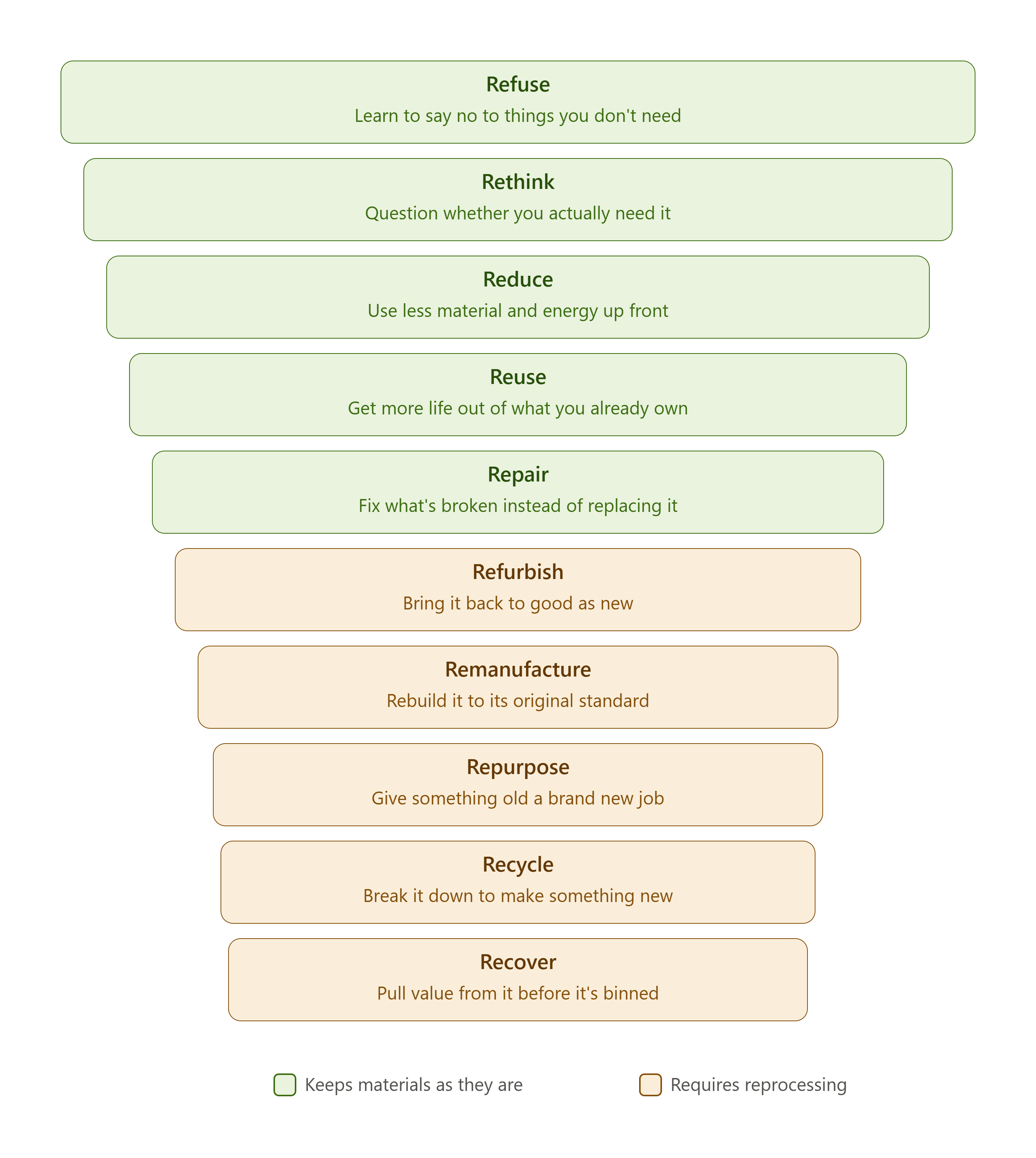
The principle underneath all of it is the same: every step down that list costs more energy, loses more value and creates more emissions. Reuse beats repair, repair beats recycling and recycling beats landfill, but only just.
Circular Economy example: Rediscover Fashion, Ireland
Ireland's National Centre for Circular Economy is based in a repurposed boiler house in Ballymun. One of its four social enterprises, Rediscover Fashion, does almost exactly what happens in the jumper's better ending: it repairs, restores, redesigns and upcycles textiles that would otherwise go to landfill. It's not a small problem to work against, either. An estimated 93% of textile waste in Ireland ends up in landfill. Since 2015, the wider Rediscovery Centre has kept over a tonne of textiles in circulation this way, alongside more than 20 tonnes of furniture and bicycles, and 81 tonnes of paint.
None of that material was ever waste in any meaningful sense. It was simply given up on one step too early, before anyone asked whether it could be mended, restyled or given to someone else first.
Most organisations have a version of this sitting in their own waste stream too. It's usually missed because things get looked at in broad categories, "textile waste," "general waste," "old stock," rather than as specific items with a specific source and a specific reason they were thrown out.
Why the bin is a climate problem
Recall the landfill ending of the jumper story? It's not a neutral ending. When organic material (food, wool, anything biological) breaks down in a landfill, it does so without oxygen, and that process produces methane: a greenhouse gas with a warming effect over 80 times stronger than CO₂ in its first 20 years. Globally, the waste sector accounts for roughly a fifth of human-caused methane emissions.
So, every item that avoids that ending isn't just a tidier outcome. It's materials that didn't need to be freshly extracted, energy that didn't need to be spent reprocessing them, and emissions that never happened in the first place. That's why circular economy tends to deliver a bigger climate benefit than recycling alone. It also prevents the impact rather than managing it after the fact.
Circular Economy regulations in Ireland (2026)
Ireland's new Circular Economy Strategy 2026–2028 opens with a staggering number: only about 2.7% of materials flowing through the Irish economy are currently kept in circulation. The rest comes from virgin sources. In jumper terms, Ireland is still mostly defaulting to the bin.
There's also a live regulatory nudge behind all this. The EU's Right to Repair Directive (EU) 2024/1799 became national law on 31 July 2026, requiring manufacturers of products like appliances and electronics to offer reasonable repairs, even outside warranty, and stop designing products that block repair. Digital Product Passports are rolling out for textiles, batteries and furniture over the next few years too. Repair, reuse and traceability are moving from nice idea to how things are increasingly required to be built.
PPWR: New Rules for Packaging
If your jumper arrived in a parcel, this next bit is about the box it came in. The EU's Packaging and Packaging Waste Regulation (PPWR) becomes directly applicable on 12 August 2026. It's also one of the more consequential pieces of circular economy law to date because it targets the key packaging question head-on: do we need this much packaging in the first place?
A regulation, unlike a directive, applies identically and immediately across all 27 member states, no national transposition needed. From 12th August, that means:
- Empty space in parcels can't exceed 40%, unless there's a genuine technical reason for it.
- Strict new limits on PFAS (Per- and polyfluoroalkyl substances) and heavy metals in packaging, especially anything food-related.
- All packaging must be designed to be recyclable, with full recyclability required by 2030.
- Online marketplaces and anyone shipping goods into the EU are explicitly on the hook, not just the manufacturer.
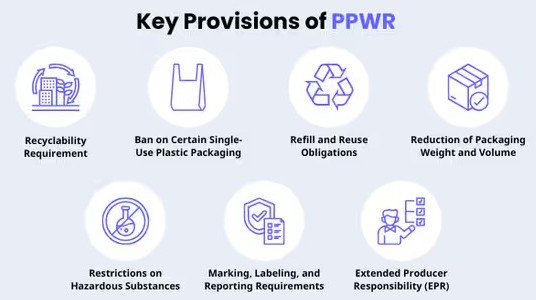
For hospitality and any business shipping, wrapping or delivering products, this is the packaging equivalent of the Right to Repair Directive. It takes "we'll sort it at the recycling stage" off the table as an acceptable default, and pushes the decision back upstream to the design and volume stage, before a box is ever filled. The question isn't how well you recycle the packaging, it's whether you needed that much of it to begin with.
Circular Economy myths, debunked
Circular economy just means recycling
Recycling is the last stop, not the destination. Circularity cares far more about everything that happens before that: can it be repaired, reused, shared or resold, so it doesn't need recycling (or replacing) at all.
It's a design or manufacturing problem, not a me problem
Product design matters enormously, sure. But every repair instead of a replacement, every purchase made second-hand instead of new, is a vote for a circular ending over the linear one for individuals and organisations alike.
It means doing everything at once
Trying to fix every waste stream simultaneously is usually how organisations end up fixing none of them. The stronger approach: pick the one or two waste items with the biggest volume, cost or environmental impact, and start there.
Circular = More expensive
Often the opposite. Repairing costs less than replacing. Reusing packaging costs less than buying new. The real barrier is usually habit, not cost.
Simple Circular Economy actions you can start today
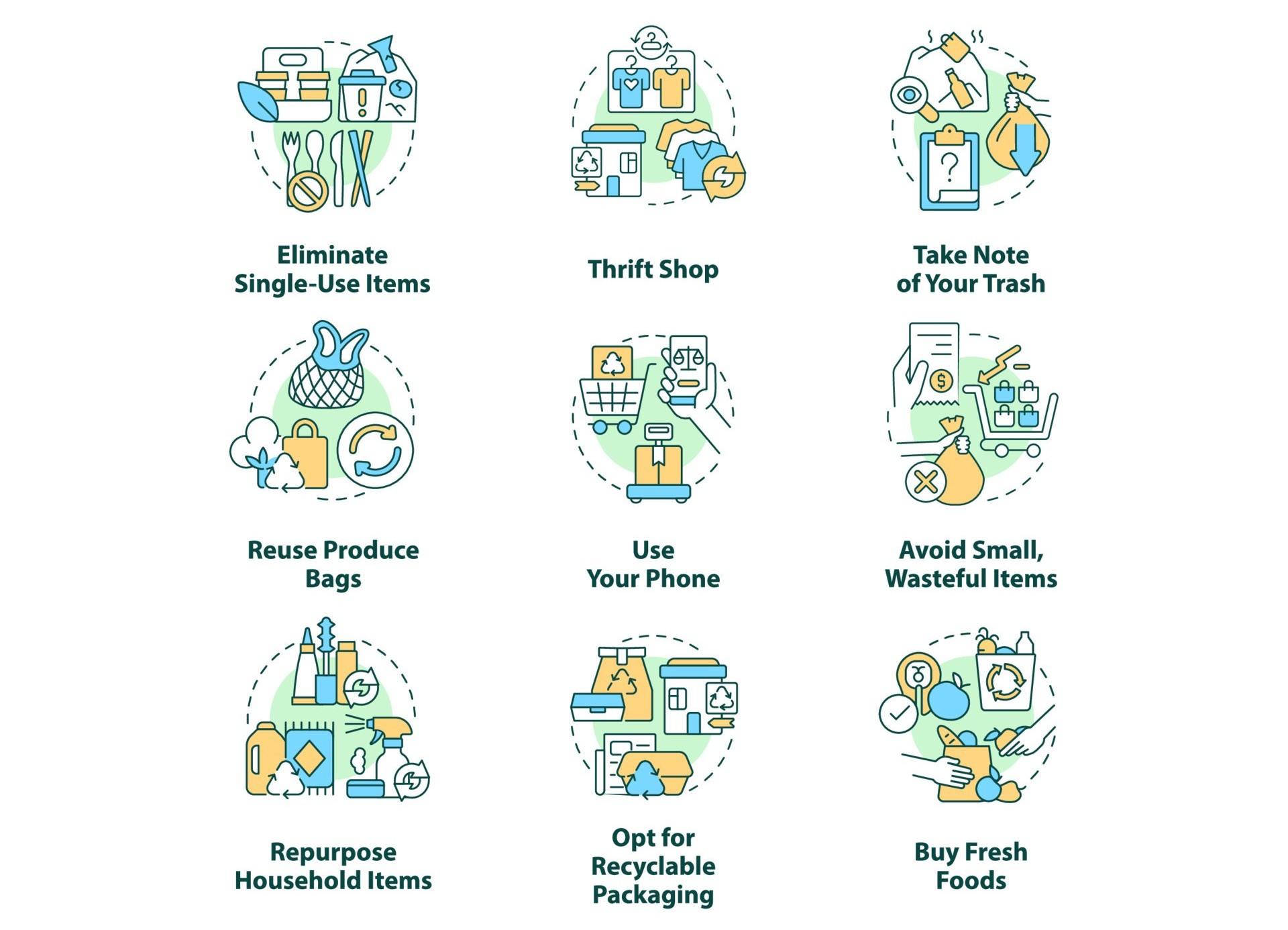
- Get specific about what you're actually discarding, not just the broad category it falls into.
- Ask the key questions before the bin question: reuse, repair, refurbish, recover, then recycle.
- Repair before replacing and buy second-hand or refurbished where it makes sense.
- Pick one waste stream to start with, rather than trying to tackle everything at once.
- Give it an owner and a simple timeline. In this case a quick win in the next 30 days is worth more than a perfect plan that never starts.
None of this requires a complete system overhaul. It requires asking just one question before something goes in the bin: can I still make use of this?
Final thoughts
Circular economy isn't a new invention. It's closer to how things used to work by default, before it became cheap and easy to buy new and throw away. The regulations catching up with that are a sign the "bin" ending is becoming the exception rather than the rule.
If you want to go beyond the jumper and start mapping where waste is actually being created in your own organisation, why it happens, and what to prioritise first, our new Cut the Waste mini-course (also a part of the Green Skills Collective membership) walks you through exactly that, using real Irish and European examples that you can emulate, in under an hour.
👉 Explore Green Skills Collective and the Cut the Waste mini-course.
💚 FSG Team
Author