
Environmental crime is no longer just a plot in a Netflix documentary
Sep 18, 2026By Raquel Noboa, Founder & CEO, Fifty Shades Greener
For years, environmental legislation has largely focused on helping businesses do the right thing. Guidance documents, voluntary standards, sustainability strategies, ESG reports… the list goes on. But Europe has now sent a very different message.
If you seriously damage the environment, it's no longer just a compliance issue. It could be a criminal offence.
No, this doesn't mean you'll be arrested for forgetting to recycle your coffee cup. But it does mean that environmental responsibility is moving from the sustainability department into the boardroom. And honestly? It’s about time!
So, what is the Environmental Crime Directive?
The Environmental Crime Directive is a piece of EU legislation designed to make sure serious environmental offences are treated as exactly that: crimes.
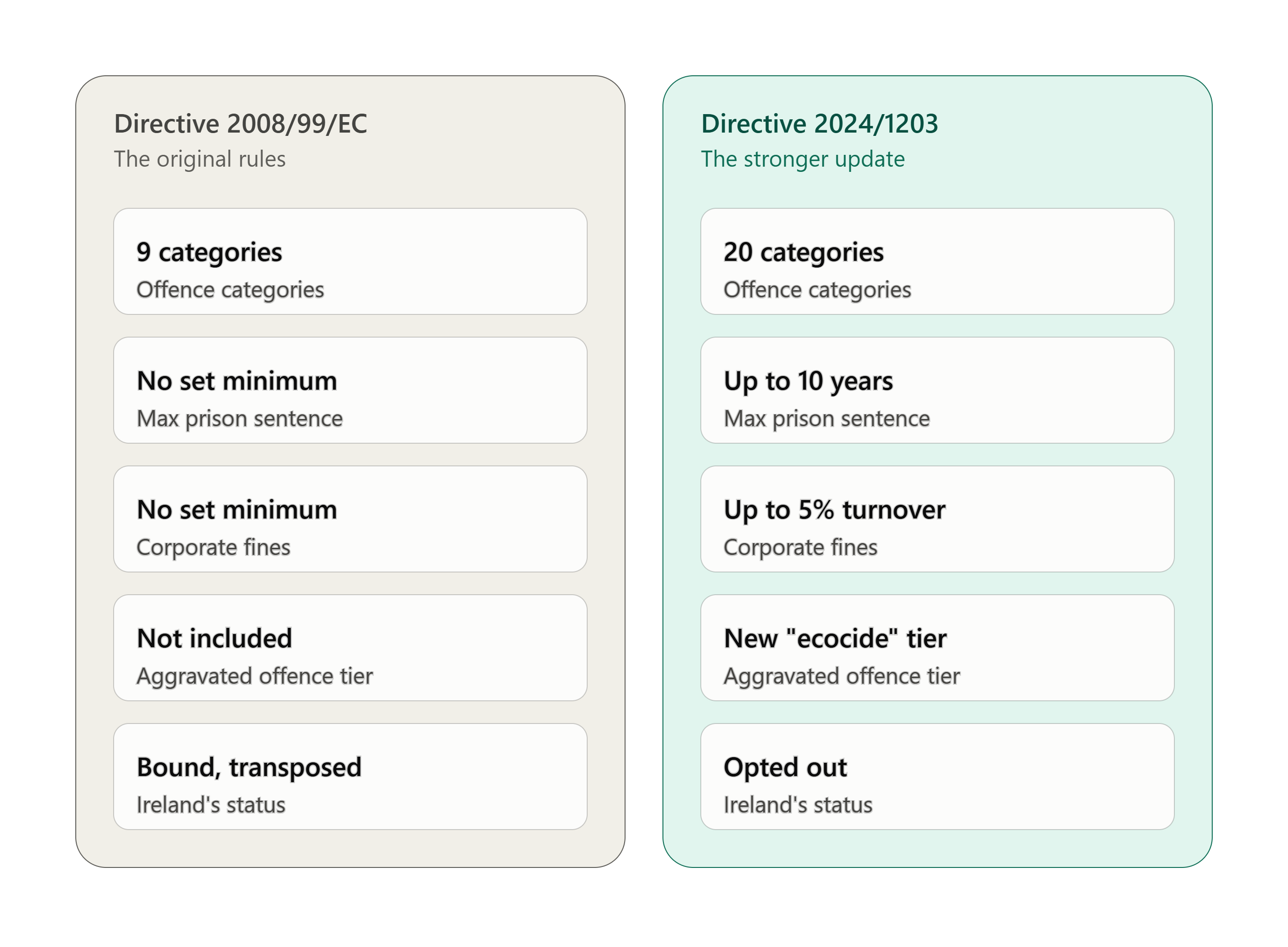
The original Environmental Crime Directive was introduced back in 2008, but many felt it wasn't strong enough. Different countries interpreted it differently, penalties varied widely, and environmental criminals often escaped with fines that simply became another cost of doing business. Meanwhile, environmental crime kept growing.
Today, it's considered one of the fastest-growing criminal activities in the world, right up there with drug trafficking, human trafficking and illegal arms trading. So the EU went back to the drawing board (Thank you!).
The result is a much stronger Directive that significantly expands the list of environmental offences, introduces tougher penalties and requires every Member State to strengthen criminal enforcement. In simple terms, Europe is saying:
"If you knowingly cause serious harm to the environment, expect serious consequences."
Does this actually apply to Ireland?
Here's the twist: Ireland opted out.
Under a long-standing EU arrangement covering justice and home affairs matters, Ireland (along with Denmark) isn't bound by this Directive and isn't required to write its new criminal offences into Irish law. So technically, an Irish business operating only in Ireland isn't directly exposed to it. But "technically" is doing a lot of work in that sentence.
If your business operates in, sells into, or has supply chain partners in any of the other 25 member states, this Directive is very much live there, with real criminal liability attaching to individuals, not just companies.
Ireland choosing not to legislate this way doesn't mean Irish regulators, courts or public opinion are moving in a more relaxed direction either. If anything, an opt-out like this tends to get revisited once everyone else has lived with the stricter version for a while.
So: technically exempt, practically still worth paying attention to.
What kind of activities are we talking about?
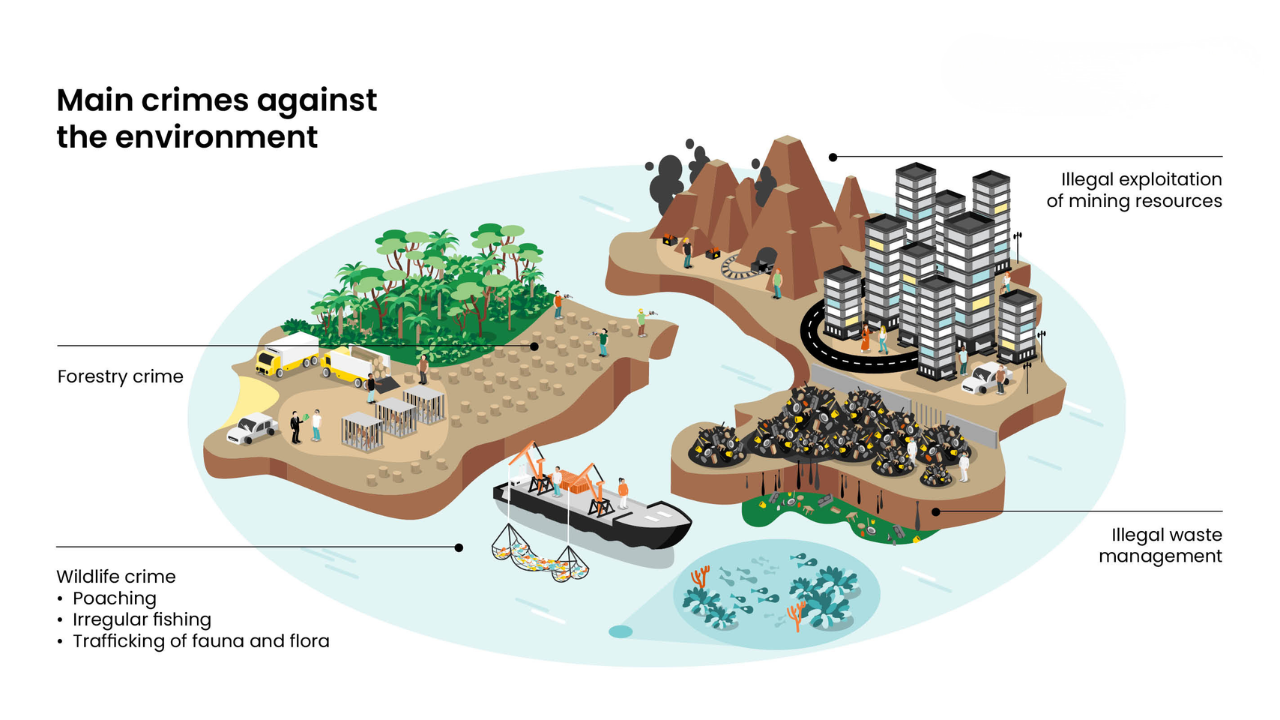
This isn't aimed at businesses that accidentally printed one too many pages or forgot to switch off the office lights. The Directive focuses on serious environmental offences, including:
- Illegal waste disposal and trafficking
- Major pollution of air, water or soil
- Illegal handling of hazardous chemicals
- Destruction of protected habitats and wildlife
- Serious breaches of environmental permits
- Illegal water abstraction
- Certain offences relating to deforestation and protected species
In other words, activities that can cause significant harm to people, wildlife and ecosystems.
Can a company be prosecuted?
Yes. But here's the important bit: It's not just the company that could be held responsible. In certain circumstances, directors, senior managers and other individuals may also face criminal liability if they were directly involved, authorised the activity or failed to properly supervise what was happening.
That's quite a shift.
For years, sustainability has often been viewed as "someone else's job." The Environmental Crime Directive reminds us that environmental governance starts at the top. A sustainability strategy sitting beautifully on a shelf won't protect anyone if the organisation's actions tell a different story.
What are the penalties?
The penalties are designed to hurt. Depending on the offence and how Ireland applies the Directive through national legislation, businesses can face substantial fines, restrictions on operating, loss of permits and, in the most serious cases, closure of facilities.
Individuals may also face criminal prosecution and imprisonment for the most serious offences. The days of treating environmental fines as "the cost of doing business" are rapidly disappearing.
Does this mean greenwashing is now a crime?
Not exactly and this is where many people get confused.
The Environmental Crime Directive deals with what businesses do.
The Empowering Consumers Directive deals with what businesses say.
They're different pieces of legislation, but together they send a very clear message. If you're causing environmental harm, you can face criminal consequences. If you're exaggerating your sustainability credentials, you can face consumer protection enforcement.
Either way, businesses need evidence to support both their actions and their communications.
Why should businesses care?
Because sustainability is changing. Not long ago, environmental responsibility was seen as a "nice-to-have". Today it's becoming part of corporate governance, legal compliance and risk management.
- Directors need to know what environmental risks exist within their organisations.
- Managers need systems that identify problems before regulators do.
- Employees need training so they understand not only what the rules are, but why they matter.
A sustainability strategy doesn't reduce emissions, People do. And people can only make good decisions if they understand them.
What should organisations do now?
First of all, there's no need to panic. Most organisations are trying to do the right thing anyway.
But now is a good time to ask some honest questions.
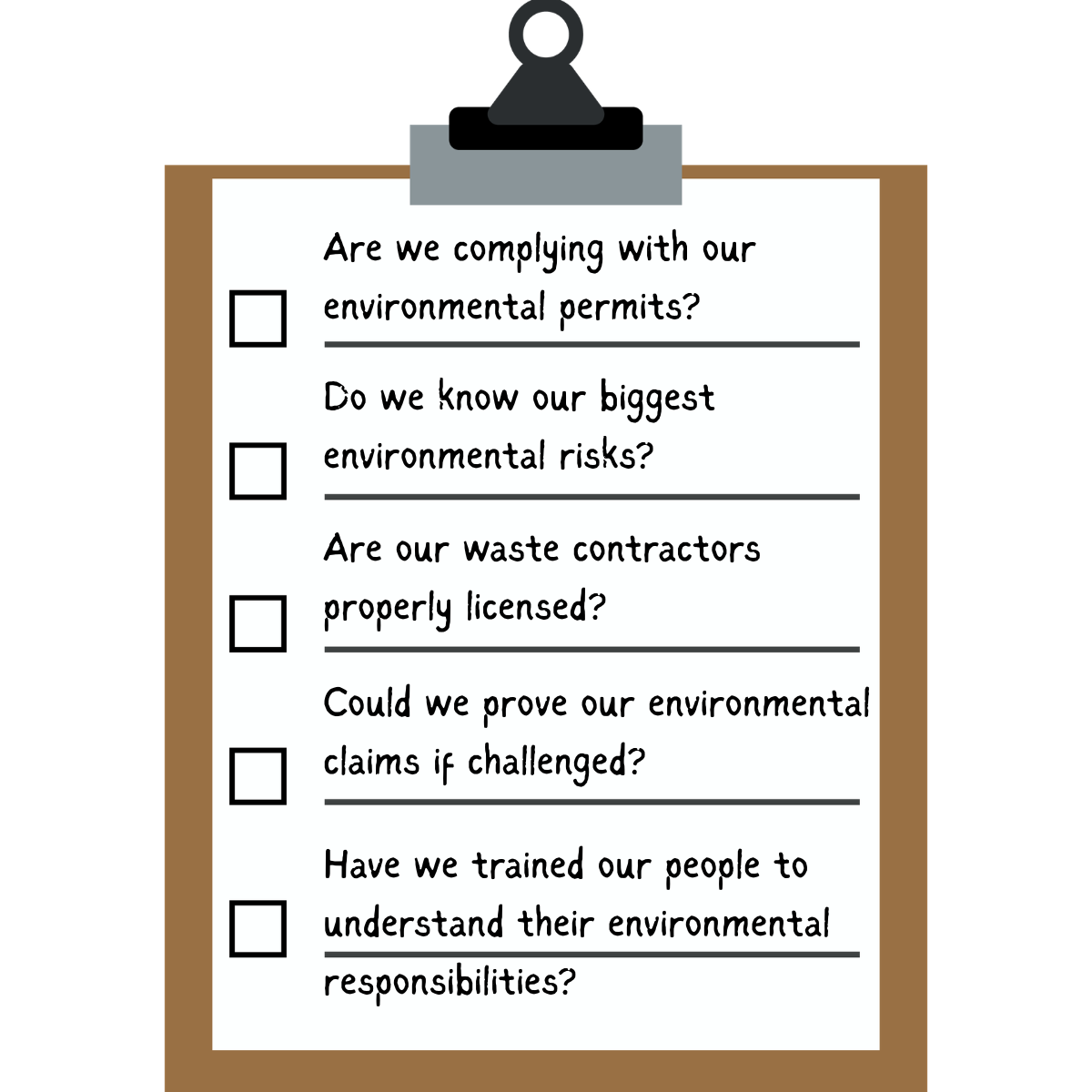
If any of those questions make you feel slightly uncomfortable, don't worry. That's exactly where improvement begins.
My final thought
I've spent years saying that sustainability isn't about ticking boxes, and this legislation proves the point. The companies that will thrive over the next decade won't necessarily be the ones with the glossiest ESG report or the most impressive sustainability page on their website. They'll be the organisations that genuinely understand their environmental responsibilities, invest in their people and can demonstrate that they're doing the right thing when it matters.
Because sustainability isn't just about protecting the planet anymore. It's also about protecting your business. And that's a conversation every boardroom should already be having, opt -out or not.
Fancy talking this through with people who get it?
Join us at our free weekly SustainABILITY Hub, where we break down exactly this kind of regulation into plain English, no legal degree required. Every Wednesday at 13:30 UTC+1.
💚 FSG Team
Author