
AI Data Centres and Their Environmental Impact: Is Ireland Paying the Price?
Sep 04, 2026
By Raquel Noboa, Founder & CEO, Fifty Shades Greener
Every day, millions of us ask AI to write emails, create images, summarise documents or answer questions. It feels almost magical…but even magic has a footprint! Hidden behind every prompt is a warehouse filled with thousands of powerful computers working around the clock. These data centres have become the beating heart of artificial intelligence. They are also becoming one of the biggest consumers of electricity our world has ever seen.
The Electricity Behind Artificial Intelligence
In Ireland, the numbers are staggering. In 2025, data centres consumed 23% of all electricity used in Ireland. To put that into perspective, every home in the country used just 28%. We have reached the point where server farms are consuming almost as much electricity as every family, every apartment and every house across the nation combined.
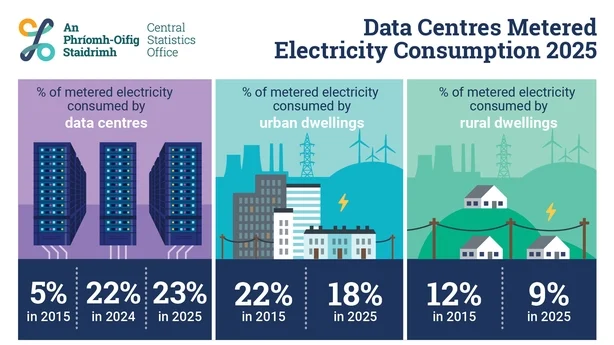
Just ten years ago, that figure was almost unimaginable. Electricity demand from data centres has increased by 360% since 2015, and the rapid expansion of artificial intelligence is expected to push demand even higher.
We often hear that AI is the future, but whose future are we building?
Ireland is trying to electrify transport, encourage people to install heat pumps, decarbonise industry and reduce emissions. Families are being asked to use less electricity, businesses are investing millions to become more energy efficient, and communities are encouraged to play their part in tackling climate change. At the very same time, our appetite for artificial intelligence is accelerating the construction of some of the most energy-intensive facilities ever built.
This isn't an argument against AI, Artificial intelligence has enormous potential. It can accelerate medical research, improve accessibility, optimise transport systems, reduce waste and help us solve complex environmental problems. Used wisely, it could become one of humanity's greatest tools. The question is not whether AI is good or bad, the question is whether we are asking difficult enough questions about the infrastructure supporting it.
One of those questions is water.
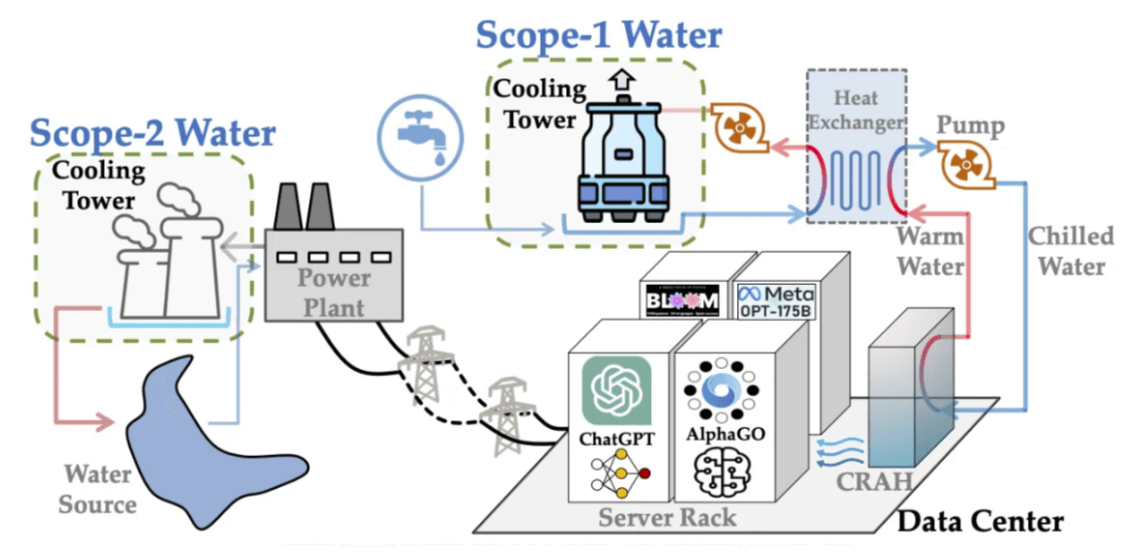
Cooling thousands of high-performance processors generates enormous amounts of heat. Around the world, many AI data centres rely on significant volumes of freshwater for cooling, alongside the water already required to generate much of the electricity they consume. Yet in Ireland, there is still very little public information about exactly how much water individual facilities use. The absence of transparent reporting makes it difficult for communities, policymakers and researchers to understand the true environmental impact. The European Union is now moving towards requiring greater disclosure of energy efficiency and water consumption from large data centres, recognising that transparency is becoming essential.
As climate change intensifies, droughts become more frequent and water scarcity affects more communities across the world, this conversation becomes impossible to ignore.
The Dublin Hosepipe Ban Raises Questions
This summer, while much of Ireland is enjoying record temperatures, Uisce Éireann introduced a six-week hosepipe ban across the Greater Dublin Area to protect drinking water supplies. Households have been asked not to water gardens, wash cars or fill paddling pools because reservoirs were under pressure.

At the same time, the vast majority of Ireland's data centres are concentrated in and around Dublin, where demand for both electricity and water continues to grow. I'm not suggesting that data centres caused the hosepipe ban. The causes of water shortages are far more complex, including ageing infrastructure and changing weather patterns. But the timing does raise an uncomfortable question. As ordinary people are asked to conserve every drop, shouldn't every sector, including some of the world's wealthiest technology companies, be expected to demonstrate the same level of transparency and accountability?
Technology companies frequently tell us AI will help solve humanity's greatest challenges, perhaps it will, but shouldn't the infrastructure powering that future also reflect our values? Should we continue expanding AI without openly discussing its electricity demand, water use and environmental consequences?
Innovation Without Accountability
Innovation should never be free from accountability and progress should not be measured solely by faster processors or more powerful algorithms. It should also be measured by whether it improves people's lives without compromising the natural resources future generations will depend upon.
The challenge facing governments, regulators and the technology sector is not to stop innovation, it is to ensure innovation happens responsibly. Because if we build a future where machines become more important than the people they are meant to serve, we may discover that we have confused technological advancement with human progress.
So perhaps the most important question we should all be asking isn't how intelligent AI will become, but:
When we have to choose between serving technology and serving humanity, which one comes first?
We cannot allow the AI revolution to become another environmental crisis that we failed to question until it was too late. Technology should improve humanity, not compete with it. If we stop asking difficult questions today, we may wake up tomorrow to discover that we built an incredibly intelligent future that forgot to put people first.
We've only touched on the water side of this story here, and it deserves more than a paragraph.
In Water: The Gold We Keep Spilling, our founder Raquel Noboa goes further into why water security might be the resource conversation Ireland isn't having enough of, and why we're in a rare position to get ahead of it before it becomes a crisis.
👉 Read our other blogs and continue the conversation.
💚 FSG Team
Author